The short answer
Using mouse repellent pouches for RV protection works well when securing enclosed, low-airflow spaces like cabinets, under-bed storage, and basement bays during storage. Botanical pouches release concentrated scents that disrupt rodent scent trails without requiring poison or trap disposal. For winter storage, place pouches throughout sealed interior zones for clean, low-maintenance deterrence.
| RV Storage Area | Airflow Level | Repellent Fit | Primary Benefit |
|---|---|---|---|
| Enclosed interior cabinets | Very Low | Excellent | Shields pantry shelving, paper goods, and linens |
| Under-bed and dinette bays | Low | Excellent | Protects hidden wire looms and foam cushions |
| External utility compartments | Medium | Good | Discourages entry around plumbing and shore power ports |
| Open main living floor | Moderate | Moderate | Complements mechanical slide-out and door seals |
When preparing a rig for months of sitting idle in a driveway or storage yard, choosing clean deterrents makes spring setup far easier. You can explore RepelNest 10-pack options for seasonal camper protection to secure all your enclosed cabinets before parking for the off-season.
Where mouse repellent pouches for RV storage work best
Recreational vehicles present a unique challenge for rodent control. Campers contain hundreds of hidden pathways, including wheel wells, plumbing drop-outs, slide-out rubber seals, and subfloor wiring channels. Mice seek out stored RVs during colder months because these vehicles offer dry shelter, insulation materials, and quiet surroundings free from human activity.
Pouch-based repellents excel in small, confined micro-environments. In quiet corners where air currents are low, botanical scents build up to a concentration that rodents find overwhelming. Understanding how scent pouches deter rodents in tight spots helps you position them effectively. Rather than placing a single pouch on the main floor where air movement dilutes the fragrance, target enclosed boxes, drawers, and under-sink cavities.
Key interior zones that benefit most include:
- Under-bed storage bays: Rodents frequently target mattress foam and stored bedding for nesting material.
- Lower galley cabinets: Remnant food odor draw mice into under-sink cutouts where drain pipes enter the subfloor.
- Dinette bench storage: Hidden utility wiring behind dinette framing creates natural travel highways.
- Front storage pass-throughs: Large exterior basement compartments link directly to internal floor cavities.
Selecting the right pouch format ensures consistent fragrance output. If you are comparing different botanical options, read about what to evaluate in mouse repellent pouches before stocking your winter supply cabinet.
How scent pouches deter rodents inside campers
Mice rely primarily on their sensitive olfactory system to navigate, locate food, and detect predators. Botanical repellent pouches utilize concentrated plant oils—such as peppermint, cedar, or eucalyptus—that flood this olfactory sense. The intense aroma masks the pheromone trails that mice use to mark safe pathways through your camper subfloor.
Unlike traditional snap traps or sticky boards, scent pouches do not require routine inspection to remove carcasses. This makes them ideal for stored vehicles that you might only visit once every few weeks. Furthermore, avoiding chemical baits is a major safety advantage in recreational vehicles. Rodenticides can lead to mice dying inside inaccessible wall cavities or floor ducts, creating severe odor problems that are difficult to remedy in a camper shell.
According to urban pest management guidance from the University of Minnesota Extension, non-chemical deterrents work best as part of an integrated management strategy that combines Sanitation, exclusion, and repellent placement. Using pouches in tandem with thorough RV winterization methods similar to those used when you keep mice out of a garage ensures your rig stays clean all winter.
Step-by-step RV placement for winter storage
To achieve optimal protection while your camper is parked for the off-season, follow a systematic placement routine before lowering the jack stands and covering the rig.
We may earn a commission if you buy through our links, at no extra cost to you.
Step 2: Seal physical entry portals
Inspect the underbelly of your RV. Mice can squeeze through openings as small as a dime. Use coarse stainless steel wool or expandable foam to seal gaps around wire pass-throughs, low-point drains, and water line intakes. The Penn State Extension recommends inspecting foundation lines and utility entries to eliminate structural entry points before winter set-in.
Step 3: Deploy pouches in tight compartments
Place one pouch inside each upper and lower cabinet, inside the utility compartment behind the water heater, and near electrical junction boxes. In larger pass-through storage areas, place a pouch at each outer corner near the hatch doors.
Step 4: Protect seasonal accessories
Store your fresh water hoses, sewer fittings, and outdoor gear in sealed plastic totes rather than loose in the basement. When draining hoses and outdoor fixtures, refer to proper steps for how to winterize a garden hose and nozzle so lingering water does not freeze or attract moisture-seeking pests.
Step 5: Seal slide-outs and external vents
Close all slide-outs fully to compress rubber bulb seals. Insert mesh screens over furnace exhaust ports, water heater vents, and refrigerator intake panels to stop mice from building nests in appliance burners.
Pros and cons
-
Pros:
- Clean, poison-free application suitable for closed vehicle interiors.
- No routine trap reset or dead rodent removal required during storage.
- Compact pouch sizes fit easily inside narrow cabinet corners and electrical bays.
- Pleasant natural fragrance eliminates stale winter storage odors.
-
Best results when:
- Deployed in closed, low-airflow compartments rather than open outdoor areas.
- Paired with thorough food removal and mechanical gap sealing.
- Replaced according to seasonal storage timelines to maintain scent strength.
- Placed on dry surfaces away from standing water leaks.
Who mouse repellent pouches are ideal for
- Seasonal RV owners: If your travel trailer or motorhome sits parked in storage for several consecutive months without weekly check-ins, pouches provide low-maintenance peace of mind.
- Families with pets and kids: Owners who want to avoid placing hazardous poison blocks or sharp spring traps in lower camper cabinets.
- Camper owners focused on quick spring prep: Travelers who prefer opening an odor-free camper in April without dealing with trap disposal or carpet scrubbing.
If you want a straightforward protection plan before parking your rig for the season, check current pouch availability and placement guidance to prepare your camper compartments.
Where RepelNest repellent pouches fit best
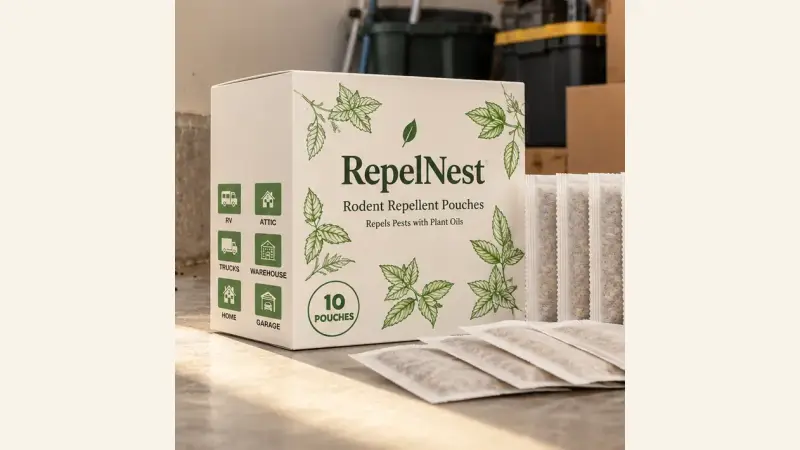
RepelNest repellent pouches offer a poison-free, pouch-based way to deter rodents in garages, basements, attics, and storage spaces, with no conventional trap setup required. Designed for simple placement, these pouches help keep unwanted pests out of your vehicle’s interior compartments without mess or ongoing maintenance.
Each pack contains 10 individual pouches, with each pouch measuring about 2.44 × 3.62 inches. This compact size fits into cabinet back corners, under dinette cushions, and inside narrow basement utility bays. Intended placement areas specified on the packaging cover homes, garages, attics, warehouses, trucks, and RVs, making them versatile for all your storage needs. Without poison baits to manage or mechanical traps to clear, you simply position the pouches according to the label instructions.
To protect your camper investment during off-season storage, you can review the RepelNest 10-pack details and risk-free offer with its included 30-day money-back guarantee. If this sounds like what you need, take a look at what RepelNest repellent pouches offers.
Sources
- US EPA, Rodenticides and Deterrent Safety. Information on poison safety standards and non-toxic pest control alternatives.
- CDC, Seal Up Rodent Entry Points. Guidance on sealing gaps and small openings to prevent rodent entry.
Product details come from the seller’s page and can change.
Questions people actually ask
How many mouse repellent pouches do I need for an RV?
Most standard travel trailers and motorhomes require 8 to 10 pouches for complete coverage during winter storage. Place one pouch in every cabinet, under each bed or bench compartment, and in the external pass-through storage bays.
Can I use mouse repellent pouches while living in the RV?
Yes, non-toxic botanical pouches are safe for use while occupying your camper. They produce a pleasant natural fragrance while continuously deterring mice in lower cabinets and utility spaces.
How long do repellent pouches last inside a closed RV?
In closed, low-airflow interior spaces, botanical repellent pouches typically remain effective for 30 to 90 days. For long-term winter storage, inspect scent strength mid-season and replace as needed.
Do mouse repellent pouches work in exterior RV storage bays?
They work well in enclosed exterior pass-through compartments as long as door weatherstripping keeps heavy drafts out. For open undercarriage areas, combine pouches with physical steel mesh barriers.