The short answer
A handheld steamer vs. iron comparison comes down to the job in front of you. A handheld steamer is faster for one shirt on a hanger, knits, and a dress out of a suitcase. An iron still wins on crisp creases, pressed dress shirts, and a full pile of laundry. Choose by what you wear most days.
If you only own one, choose based on what you wear. Mostly casual, soft, and unstructured clothes point to a steamer. Dress shirts and creased trousers every workday point to an iron. Good Housekeeping’s cleaning lab, which tests both, says having both gives you the most options.
Handheld 2-in-1 models, like the Rowelle portable steamer covered below, add a small heated plate so you can press a collar or hem without setting up a board. That closes part of the gap, not all of it. What we say about it is based on the maker’s specs and on how this type of tool works.
Handheld steamer vs. iron comparison at a glance
| Situation | Handheld steamer | Iron |
|---|---|---|
| One shirt on a hanger | Faster; no board to set up | Works, but slower to start |
| Knits, velvet, and soft dresses | Keeps texture | Can flatten or shine |
| Crisp creases and pleats | Softens wrinkles; does not set a crease | Best choice |
| Dress shirts that must look pressed | Fine for a quick touch-up | Better for collar, placket, and front |
| Travel and small spaces | Packs easily | A full iron usually stays home |
| A pile of laundry | Small tank, more refills | Larger tank and a wide plate |
What steam does, and what pressure does
Wrinkles are fibers that have been bent and set in place. Heat and moisture relax them. Pressure and weight flatten them into a new shape.
A steamer supplies heat and moisture, and gravity does the rest while the garment hangs. Nothing presses the fabric flat, which is why steamed clothes look smooth but soft, and why steam is kind to textures like knits, velvet, and lace. That moisture is a burst on a shirt. A portable evaporative cooler adds moisture to a whole room for hours, and it only helps when the air is dry.
An iron supplies heat, often steam, and a lot of pressure through a wide, hot plate. That is how you get a crease that stays put. It is also how you flatten a texture you wanted to keep or put a shine on dark fabric.
A 2-in-1 handheld does a little of both. It steams a hanging garment, and its small plate can press a strip of fabric against something firm. The plate is the size of a palm, not a full soleplate, and you supply the pressure.
When a steamer wins
- One item, right now. No board to set up, no waiting for a big iron to heat. You steam the shirt on the hanger and leave.
- Knits, soft dresses, and casual clothes. Good Housekeeping lists knits, soft casual garments, and pieces with sequins or beads among the steamer’s strengths.
- Awkward shapes. Shoulders, puffed sleeves, and gathered skirts are easier with a tool that comes to the fabric than with a board.
- Textures you do not want flattened. Velvet, corduroy, and lace do better with steam than with an iron, per Good Housekeeping.
- Travel. A compact handheld fits in a bag. A full iron does not.
- Curtains and drapes, which you can freshen while they hang.
When an iron still wins
- Crisp creases and pleats. Good Housekeeping notes that steamers can struggle with creases, pleats, and stubborn wrinkles. An iron is built for exactly those.
- Dress shirts that must look pressed. Collar points, a placket, and a flat front look sharper under pressure.
- Batch work. Irons carry larger tanks, and Good Housekeeping found the best-performing models draw about 1,700 to 1,800 watts.
- Sewing and quilting, where you press seams flat as you go.
What not to steam
This is where people ruin clothes, so read the care label before you start. A crossed-out iron or steam symbol is your answer.
- Leather and suede. Better Homes & Gardens says never to steam them. They can warp, crack, stiffen, or water-spot. Good Housekeeping is a bit softer, saying to steam them very carefully if at all. Either way, a home steamer is a bad bet.
- Waxed and coated fabrics, including waxed jackets and water-resistant outerwear. Heat and moisture can melt or break down the coating.
- Vinyl, and thin plastic trim or glued embellishments, which steam can melt or loosen.
- Sharp pleats. Steam can relax them out of shape, especially in silk or chiffon.
- Structured, tailored jackets with fused interlining or shoulder pads. These can react unpredictably to heat and moisture, so a professional cleaner is the safer route.
- Dirty or stained clothes. Better Homes & Gardens lists them as well. Clean first, then de-wrinkle, because heat can set a stain.
For blends, follow the most delicate fiber. When in doubt, test steam on an inside seam first.
Where Rowelle fits
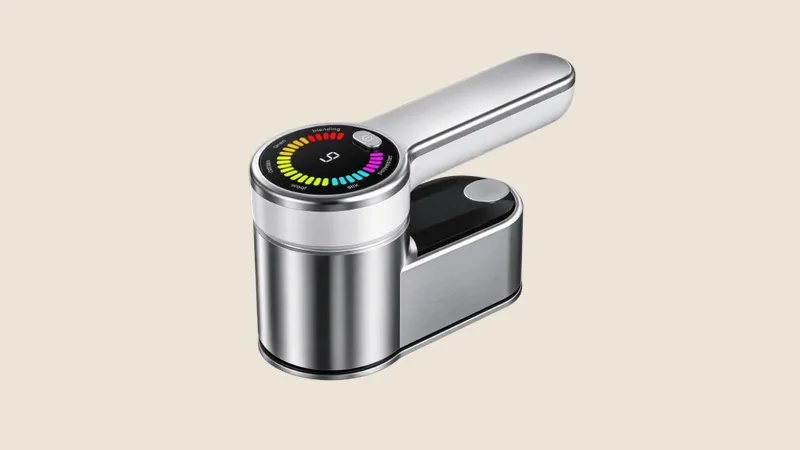
Rowelle is a handheld 2-in-1 steamer and dry iron we can link to. The maker’s product page lists:
- 1,200 watts, with six settings: a dry-heat mode plus five steam modes, all chosen with one button and shown on an LCD.
- A flat aluminum plate for direct pressing on collars, cuffs, and hems, and a rotating handle to reach awkward spots.
- A tank of about 4 fl oz (120 mL), with a measuring cup to fill it.
- An insulated resting tray for setting it down between passes.
- Weight: 1.26 lb (570 g). Size: about 7.2 × 2.8 × 3.9 in.
- Care: unplug, let it cool on the tray, empty any leftover water, and wipe it dry before storing.
That combination is the reason to look at it: one small tool that steams a hanging shirt and can press the collar, cuff, or hem flat, without setting up a board. Five steam levels let you go gentler on a silk blouse than on denim. It is light enough to pack, and the rotating handle and resting tray make quick touch-ups easier.
We may earn a commission if you buy through our links, at no extra cost to you.
See the current Rowelle offer for what is in the box, the price, and the return terms.
Pros and cons
Pros
- Steam and dry press in one handheld, so small pressing jobs do not need a board.
- Five steam levels plus dry heat, which suits a closet of mixed fabrics.
- Compact and light (1.26 lb), which makes it easy to pack.
- Rotating handle and a resting tray, two details that matter more than they sound.
Good to know
- The 4 oz tank is sized for a few items. Refill if you are doing a longer session.
- 1,200 W and a compact plate are built for touch-ups and travel. For a stack of dress shirts, work in batches or keep a full-size iron for those days.
- Check the voltage printed on your unit before plugging it in abroad.
Who it’s ideal for
- You mostly need to fix one or two items before heading out.
- You travel and want something that steams and also presses a collar.
- You wear knits, soft dresses, and casual clothes, and you live in a small space without an ironing board out all week.
If you press a weekly stack of creased dress shirts, or you sew and quilt, a board and iron are still useful to keep alongside it. Leather, suede, waxed cotton, and tailored jackets need a lighter approach; see the care notes above.
How to steam a shirt without spots or shine
General technique for handheld steamers, not results from a test:
- Read the care label and pick the setting for the most delicate fiber in the blend.
- Fill only to the max line and let the steamer heat fully. Spitting usually means it is not hot enough yet or it was overfilled.
- Hang the garment and pull it gently taut from the hem with your free hand. Keep that hand away from the steam.
- Work top to bottom in slow, vertical strokes. Hold the steamer upright if the manual says to, since some models leak when tilted.
- Press collars, cuffs, and the placket with the plate against a firm, heat-safe surface. Use a pressing cloth over silk and synthetics, as Rowelle’s instructions advise.
- Let the garment cool and dry on the hanger for a few minutes before wearing it, so the fibers set smooth.
- Unplug, cool, and empty the tank after use.
A wrinkle and a dirty patio are different cleaning jobs. The guide on garden-hose pressure nozzles is about the rinse. The liquid in a steamer tank is water, not the mix from cleaning tablets, which belongs on a counter you can wipe. The rest of the cleaning shelf is where those jobs are gathered.
Sources
Carolyn Forté, “Iron vs Steamer? Experts Reveal Which Works Best for Your Clothes,” Good Housekeeping, December 22, 2025. Cited without a link: the piece is a product comparison with shopping buttons.
“9 Clothing Items You Should Never Steam (and What to Do Instead),” Better Homes & Gardens, October 8, 2026. Cited without a link: the piece is a commercial magazine feature, not a government, university, or maker care document.
Rowelle product page (seller), viewed November 18, 2026. Specifications, included items, and marketing claims quoted above are the seller’s. The seller page is reached only through the labeled offer button above.
Questions people actually ask
Is a garment steamer better than an iron?
For different jobs. A steamer is faster for one item on a hanger, for knits, and for awkward shapes, and it is easier to travel with. An iron is better for crisp creases, dress shirts that need to look pressed, and big batches. Good Housekeeping’s cleaning lab says owning both gives you the most options.
Can a handheld steamer replace an iron?
For many people, most days, yes, especially if you wear casual, unstructured clothes. If you need sharp trouser creases or a crisp dress shirt every morning, a steamer alone will frustrate you. A 2-in-1 with a heated plate narrows that gap on collars and hems, but it is still small next to a full-size iron.
What should you never steam?
Leather, suede, vinyl, waxed or coated fabrics, and garments with thin plastic trim or glued embellishments, where heat and moisture can melt, stain, or strip the finish. Be careful with sharp pleats and structured, fused jackets. Always check the care label first.
Can you steam silk?
Usually, with care. Good Housekeeping notes that even sheer, delicate fabrics like silk can take light steam. Keep the steamer moving and check the care label. Rowelle’s own instructions say to put a protective cloth over silk and synthetics when using its plate.
Do I need distilled water in a garment steamer?
Follow the manual. Most steamers use tap water, but some makers recommend distilled water if your tap water is very hard, because mineral buildup can clog the steam vents. Rowelle’s product page does not say which it recommends, so check the included manual.
Has Daily Insight Desk tested Rowelle?
No. What we say about Rowelle comes from the maker’s product page. General advice on steaming comes from Good Housekeeping and Better Homes & Gardens, which we name in the sources. Those magazine pages recommend products, so this guide cites them without linking.