The short answer
Rolling knife sharpeners are good at the one thing most home cooks get wrong: holding a steady angle. A magnetic base clamps the knife at a fixed angle, and you roll an abrasive disc along the edge. No freehand wobble, no soaking a stone, no learning curve measured in months.
That makes a rolling sharpener a genuine step up from the pull-through slot in a kitchen drawer, and a reasonable alternative to a whetstone for people who know they will never learn one. It is not magic. It is slower than a pull-through. It is less flexible than a set of stones. It struggles with very wide blades, and it cannot touch serrations.
This guide explains how the tool works, what an independent review of one actually found, and where rolling models we can link to, including KatuSharp and Cloedar Holkeem, sit in that picture. Everything we say about those offers comes from the makers’ specs and from how this type of tool works.
How a rolling sharpener works
Sharpening means grinding a little steel off both sides of the edge until they meet in a clean, thin apex. The angle of each side, usually around 15 or 20 degrees, decides how keen and how durable that edge is. Keeping that angle the same on every stroke is the skill. It is why whetstones take practice.
A rolling sharpener splits the job into two parts:
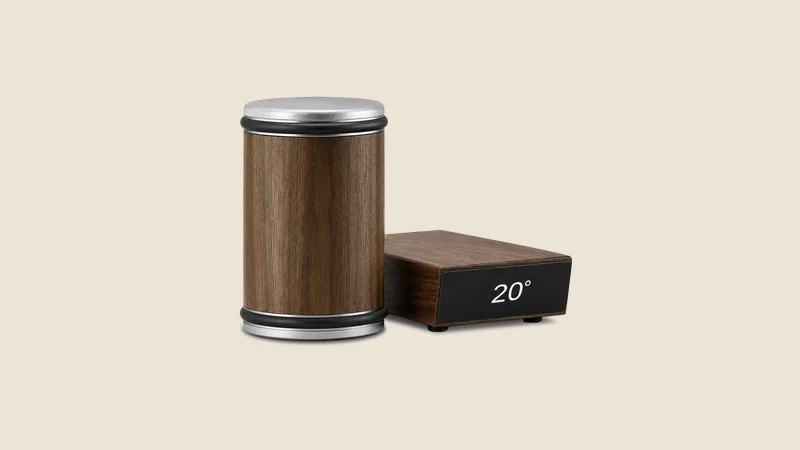
- A magnetic angle block. The flat of the blade snaps onto a wedge cut at a fixed angle, so the knife sits edge-up at, for example, exactly 20 degrees.
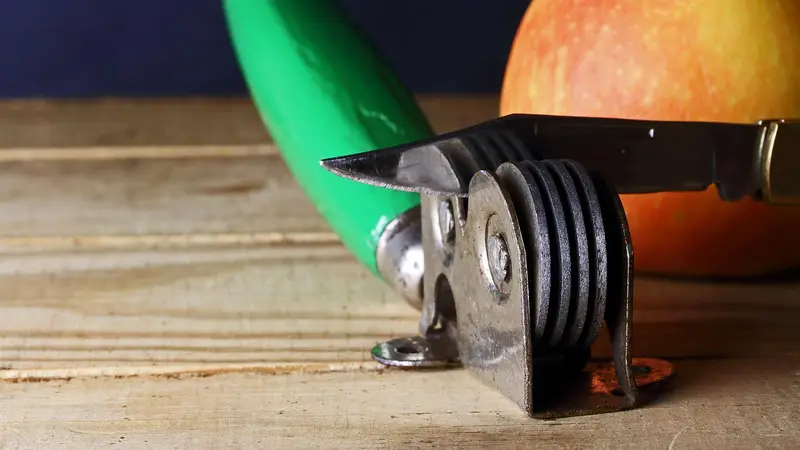
- A rolling abrasive disc. A wheel with a diamond or similar abrasive face rolls on the counter beside the block. Its face meets the edge at the block’s angle. You roll it back and forth along the blade, then flip the knife and do the other side.
Because the angle is set by the block, not by your wrist, your hundredth stroke matches your first. That is the entire idea, and it is a good one.
Why grit matters
Abrasives are graded by grit. Lower numbers are coarser and remove steel faster. Higher numbers are finer and leave a smoother, more polished edge. A dull or chipped knife needs a coarse grit to rebuild the edge. A knife that is only slightly dull needs a finer grit to refine it. Some rolling sharpeners ship with one abrasive plus a smooth honing side. Others, including KatuSharp, use two abrasive grits on one disc.
Rolling vs. pull-through vs. whetstone
Pull-through and electric sharpeners
You drag the knife through a V-shaped slot lined with abrasive, or through spinning wheels. It is fast and needs almost no skill. The trade-off, as Serious Eats’ Taylor Murray describes from kitchen experience, is that these tools can remove more metal than needed, which shortens a knife’s life over years of use. The fixed slot also does not adapt to the knife’s original edge angle.
Whetstones
A whetstone can do everything: any angle, any grit, any shape of blade. It is also the slowest to learn. Most stones need soaking or lubricating, and a beginner tends to rock the angle and round the edge. Serious cooks still prefer stones, and for good reason.
Rolling sharpeners
They sit in the middle. They take off less metal than a pull-through and need far less skill than a whetstone. They are less versatile than either in one way or another: slower than the slot, narrower than the stone. For a home cook with a block of ordinary stainless knives, that middle is often exactly the right place to be.
What the reporting found
Serious Eats ran a sharpness test on a different rolling sharpener. In March 2025, Taylor Murray reviewed the Horl 3 Cruise, a German rolling sharpener with a diamond disc, a honing side, and 15- and 20-degree magnetic angles. She measured edges with an edge tester before and after.
Her badly worn, chipped stainless knife read 1044 on that tester at the start. After about 10 minutes, roughly 100 passes per side, it was down to 600. With more time she got it to 239, which she described as about as sharp as a double-edged razor blade and most high-end knives out of the box. Lower is sharper on that scale.
Three points from that review apply to rolling sharpeners in general:
- It works on a truly dull knife, but not quickly. Chips take a lot of passes when the coarsest abrasive is not very coarse. A coarse whetstone would have been faster.
- The magnet holds. She reported that the magnetic block did not release the knife no matter how much pressure she used, which is the feature the whole design depends on.
- Wide blades are awkward. A large cleaver was too tall to meet the disc properly without improvising. Paring knives and ordinary chef’s knives were fine.
Her verdict: easier than a whetstone, no soaking and no mess, a clever solution for people who want better than a pull-through but will not master stones. It will never do what a full set of whetstones can.
Where KatuSharp fits
KatuSharp is a rolling sharpener designed to hold the angle for you while you roll a diamond disc along the edge:
- A two-sided diamond disc with a 400-grit side to restore a dull or damaged edge and a 1000-grit side to refine it. You flip the disc 180 degrees to switch.
- A 15° / 20° magnetic angle base (AngleLock), using N45 magnets.
- A body of oak and aluminum alloy, with a disc that is replaceable when it wears.
- Dry use, with no water or oil.
- In the box: the sharpener, the disc pre-installed, and an instruction manual.
The two-sided disc is the practical appeal: the 400-grit side restores a dull or damaged edge, and the 1000-grit side refines it, so one tool can take you from neglected to a working edge. The magnetic base holds a 15° or 20° angle for you. It works dry, with no water, no oil, and no stone to soak. The disc can be replaced when it wears, and the offer includes a 30-day money-back guarantee.
We may earn a commission if you buy through our links, at no extra cost to you.
See the current KatuSharp offer for the price, shipping time, and guarantee terms.
Where Cloedar Holkeem fits
Cloedar Holkeem is another rolling sharpener designed to hold the angle for you while you roll a diamond disc along the edge:
- Two diamond abrasive discs at 400 and 10,000 grit. The 400-grit disc restores a worn edge and the 10,000-grit disc polishes and refines it.
- A magnetic angle base that holds the knife so you roll the disc along the edge, with no whetstone technique.
- Manual use, with no electricity, cords, or batteries.
- Everyday kitchen knives, from chef’s knives to smaller utility and paring blades.
- A 14-day money-back guarantee stated on the current offer.
See the current Cloedar Holkeem offer for the price, shipping, and guarantee terms.
Pros and cons
Pros
- The angle is set for you. This is the main reason to buy any rolling sharpener, and it is a good reason.
- Two grits on one disc, so one tool can restore and then refine.
- No water and no mess. It works dry and lives on the counter or in a drawer.
- Gentler on knives than a pull-through slot, based on how the category works and what Serious Eats reported.
- Replaceable disc, so wear does not mean replacing the whole tool.
Good to know
- Give a neglected knife more passes on the 400 side. A rolling sharpener is a controlled, gentle tool; a few extra passes beat rushing.
- The base holds 15° and 20°. If a knife was ground at another angle, the first session will set it to one of those two, which is the everyday kitchen standard.
- Keep a dedicated tool for special edges. A tapered rod is the usual helper for a serrated bread knife. Ceramic and single-bevel knives have their own sharpening path; use KatuSharp on the everyday steel knives it is built for.
- Wide cleavers may need a little extra care to meet the disc, which is what Serious Eats noticed on rolling designs.
- The 1000-grit side leaves a good working edge. Keep finer stones if you enjoy polishing further.
Who it’s ideal for
- You own everyday stainless chef’s, utility, and paring knives that need a refresh.
- You want a set angle without learning a whetstone, and a tool a second person in the house can use without a lesson.
- You currently use a pull-through sharpener and want something gentler on your knives.
If your main knife is serrated or ceramic, keep the tool made for that edge and use a rolling sharpener on the steel knives you cook with every day.
How to get a better edge from any rolling sharpener
These are general habits for the category, not results from a test.
- Start coarse on a dull knife. Stay on the coarse side until the edge catches lightly on a fingernail or bites a tomato skin along its whole length. Then refine. KatuSharp’s own troubleshooting says much the same.
- Seat the blade flat on the magnet. If the knife sits crooked, the angle is wrong no matter how carefully you roll.
- Use one angle per knife. Switching between 15 and 20 degrees means regrinding the bevel each time.
- Even strokes, both sides. Do the same number of passes on each side, and work heel to tip so the belly of the blade gets sharpened too.
- Mind your fingers. The edge faces up while you roll. Keep your hand on the disc, not near the edge, and move slowly at first.
- Hone between sharpenings. A few strokes on a honing rod straighten a rolled edge and stretch the time between real sharpenings.
- Cut on wood or plastic. Glass, stone, and metal boards undo the work fast. Our guide on whether titanium cutting boards dull knives explains why. If you are picking a surface, the best cutting board material for raw meat compares wood, plastic, and metal.
- Oil a wood board on a regular schedule. A dry board cracks and is harder on the edge you just restored. How often to oil a wood cutting board lays out a simple routine. These guides sit on the kitchen shelf.
Sources
Taylor Murray, “This Rolling Knife Sharpener Actually Makes Sharpening Knives Fun,” Serious Eats, March 11, 2025. Cited without a link: it is a “best sharpener” review with shopping buttons. The test described above was of a Horl 3 Cruise, not KatuSharp. This desk did not repeat it.
KatuSharp product page (seller), viewed November 18, 2026. Specifications, included items, and marketing claims quoted above are the seller’s.
Cloedar Holkeem product page (seller), viewed November 25, 2026. Specifications and marketing claims quoted above are the seller’s.
Questions people actually ask
Are rolling knife sharpeners good?
For most home cooks, yes. They hold the blade at a fixed angle with a magnet, so the result depends far less on skill than a whetstone does, and they take less metal off than a typical pull-through or electric sharpener. They are slower than a pull-through, and they are less flexible than a set of whetstones.
Are rolling sharpeners better than whetstones?
Easier, not better. A whetstone set can do any angle and any grit, fix chips faster with a coarse stone, and handle odd shapes. A rolling sharpener trades that range for consistency. If you will never practice on a stone, the rolling sharpener is the one that will actually get used.
How long does it take to sharpen a knife with a rolling sharpener?
It depends on how dull the knife is. KatuSharp advertises about 60 seconds. In Serious Eats’ review of a different rolling sharpener, a badly worn, chipped knife took about 10 minutes and roughly 100 passes per side to make significant progress. A knife you touch up regularly takes much less.
Can a rolling sharpener sharpen serrated or ceramic knives?
Not well. A flat disc rolling along a straight bevel does not get into serrations. A magnetic angle base needs a steel blade to grab, so a ceramic knife will not hold in place. Check the maker’s instructions for any blade you are unsure about.
Should I use 15 or 20 degrees?
20 degrees is the sturdier, common default for Western-style kitchen knives. 15 degrees is a finer edge suited to thinner blades, often Japanese-style. Pick the angle that matches the knife and keep using it for that knife, so you are not regrinding the bevel every time.
Has Daily Insight Desk tested KatuSharp?
No. What we say about KatuSharp comes from the maker’s product page. What we say about how rolling sharpeners perform comes from a published review of another brand, named in the sources. That review is a product page with shopping buttons, so this guide does not link it.