The short answer
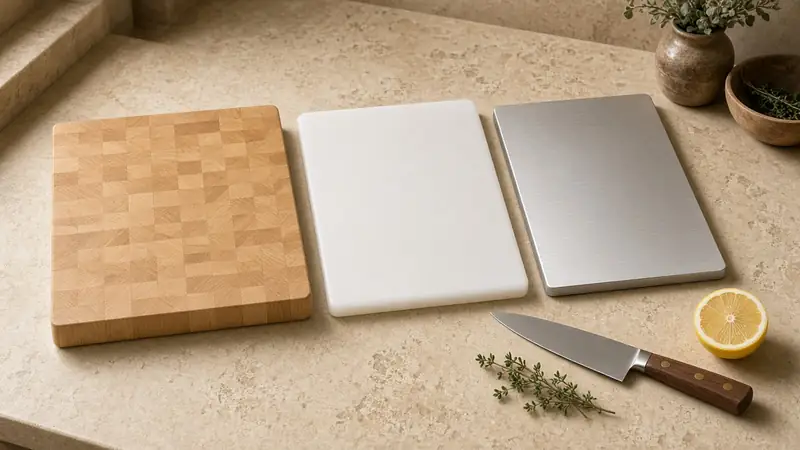
Yes. A titanium cutting board dulls knives faster than a wood or plastic board. The same is true of glass, stone, and other metal boards. The surface is harder than the knife edge, so the edge is what wears, not the board.
The other half of the advertisement is also true, and it is why these boards sell. A metal board is easy to rinse. It does not drink garlic juice the way a dry wood board can, and it does not ask you to oil it. Easy to clean is a real household benefit. It does not cancel the knife.
For everyday chopping, use wood or plastic. Keep a hard board, if you want one at all, for the jobs that are mostly a platter: bread you are not sawing for long, or food you are arranging rather than cutting. That is the recommendation from the reporting below, and it is the recommendation of this desk. Serious Eats ran the knife test on a titanium board that is not the Katori board mentioned later. If the edge is already gone, the rolling knife sharpener guide is the next kitchen question, and the rest of these notes live on the kitchen shelf.
Why the board should give a little
A knife stays sharp because the thin edge is supported by the steel behind it and is not asked to be the softer object in the collision. When you cut on a surface that yields a little, the board takes the dent. Wood does this. A decent plastic board does it too, until the grooves get deep enough that you should replace the board rather than keep sawing in the same trench.
Metal, glass, and stone do not yield. The edge rolls or abrades instead. You can feel the difference before you can measure it. The cut gets louder. The knife skates. Herbs bruise instead of slicing. Cooks sometimes describe the sound as a blade on a plate, because that is the closest cousin: the same reason you do not dice an onion in a ceramic serving dish.
Hardness is not a character flaw in a countertop. It is a category error in a cutting board. A board has two jobs, and the ads only talk about one of them. It should be cleanable. It should also be kinder to the tool you just paid to sharpen.
What Serious Eats measured
In July 2026, Taylor Murray at Serious Eats reviewed a Taima titanium cutting board, not a survey of every brand. The piece is titled “Do You Need a Titanium Cutting Board? We Reviewed One—Here’s What You Should Buy Instead.” She used the board for a week of ordinary cooking and measured a new knife before and after cutting on it.
The method section says she made 20 slices with an unused knife and checked sharpness before and after. The verdict is blunter about the timeline: the board started to dull the knife after just 10 quick swipes. Those swipes also scratched the board more than she was used to seeing on wood or plastic. A reading on their sharpness tester moved from 108, which they described as very sharp, to 261, which they described as less so. The article does not name the scale in that passage, so this guide will not invent a unit for it.
Their FAQ answers the question in the headline directly. Yes, the titanium board dulled the knife. They attribute that to the metal being hard enough to damage the edge, and they write that titanium is significantly harder than the steel of a knife. That is their materials claim, from their test, and it belongs to them. What we are willing to say without their lab is the older kitchen rule their test illustrates: do not cut on glass, stone, or metal if you care about the edge.
They also wrote down the annoyances that do not show up in a sharpness number. Food slid, especially wet food such as raw chicken. The cut felt harsh instead of slightly cushioned. The sound was part of the objection. A board that survives is not automatically a board that does its job. Murray’s line is the right one: the more durable the surface, the more of the wear moves somewhere else, and the somewhere else is the knife.
The verdict was no. Keep the wooden board.
Easy to clean is a real advantage
It would be dishonest to pretend the only sentence in that review was the dulling. Murray is clear that the board was easy to clean and light. It did not absorb moisture, and it did not hold odors or stains the way a neglected wood board can. It went through a dishwasher without rusting. The surface scratched, but the scratches were cosmetic. Those are the reasons a person who hates hand-washing looks at titanium in the first place, and they are legitimate reasons.
They are reasons about the board. They are not reasons about the knife, and they are not a hygiene miracle. “Non-porous” means liquid does not soak in. It does not mean the board is clean when you finish cutting raw chicken and walk away. Bacteria do not need a pore if you leave the smear on top. You still wash the board between raw meat and food you will eat without cooking it. You still wash it when it is dirty. Soap and hot water are that wash. A closet of sprays is a different problem, and cleaning tablets are about that closet, not about the knife. A marketing line about plastic or wood being dangerous is usually doing more work than the evidence. Serious Eats says as much: the ads inflate the problems with the boards people already own.
Wood has its own care, and it is fair to dislike that care. An unfinished board can stain, can hold a garlic smell, and can warp if it lives in a puddle. The answer to a garlic smell in wood is lemon, salt, and time, or oil and a better drying habit, not a switch to a surface that sands your edge. A garlic guide is named on this kitchen shelf and is not linked yet.
Where Katori fits
Katori is a titanium cutting board with a smooth metal surface for people who want simple cleanup. It is low-absorption and straightforward to wash, without the oiling a wood board wants, in a slim format that stores more easily than a thick block. It does not soak up moisture, odors, or stains the way neglected wood can, and it rinses with hot, soapy water.
We may earn a commission if you buy through our links, at no extra cost to you.
If you hate hand-washing a scarred plastic board, or you are tired of oiling wood, see the current Katori offer for the size, what is included, and the care instructions. The dishwasher guide walks through how to wash a metal board.
Wood, plastic, and the everyday board
Use wood or plastic for the chopping you do on a weeknight. That is the recommendation Serious Eats made after the titanium test, and it is the one this desk is willing to repeat.
Wood, especially a maple or similar board that is not a very hard species, is the pleasant one. It is quiet. It holds still if it has feet or weight. End-grain boards are the ones cooks fuss over because the fibers meet the edge as a set of ends rather than as long grain, and they can be resurfaced when they look tired. They cost more, they should not live in the sink, and they want a wipe of food-grade mineral oil when they look ashy. If you will not oil a board, do not buy a board that needs it and then feel tricked. Buy plastic.
Plastic is the unsentimental one, and it is the right one for raw meat and fish in a lot of home kitchens. It is light, it can go in the dishwasher if the maker says so, and when the cuts get deep enough to hold onto scraps, you replace it instead of performing surgery. A set of two, one for raw proteins and one for everything else, solves more of the real problem than a metal board does. The grooves are the downside. They are also the signal that the board has done its job and is finished.
A titanium board can still have a place that is not chopping. Serving something already cut. A landing spot for a hot pan if the maker actually says the board can take that heat, which you should confirm rather than assume. A surface you are willing to scratch because you like how fast it rinses, used with a knife you do not love. None of those are the job of “the cutting board.”
Glass and marble belong in the same refusal pile as titanium. They photograph well. They are how knives get dull on a Sunday.
Habits that matter more than the label
Material is the big decision. A few habits matter on whatever you chose, and none of them are a secret technique.
Wash the board after raw meat, and do not then slice herbs on the same wet smear. This is ordinary kitchen sense. It is not a claim that one material makes food safe.
Dry a wood board on its edge, not flat in a puddle. Standing water is how boards warp and how smells move in.
Oil wood when it looks dry, with an oil meant for boards, and wipe off what does not soak in. If you do not know the last time you did this, the board is telling you by the pale, rough patch.
Replace plastic when the grooves are deep enough to catch a fingernail of food. Bleach is not a personality. A new inexpensive board is the cleaner outcome.
Stop the slide with a damp towel under the board if it travels while you cut. That is a friction problem. A harder board is not the fix, and a harder board that also slides is two problems.
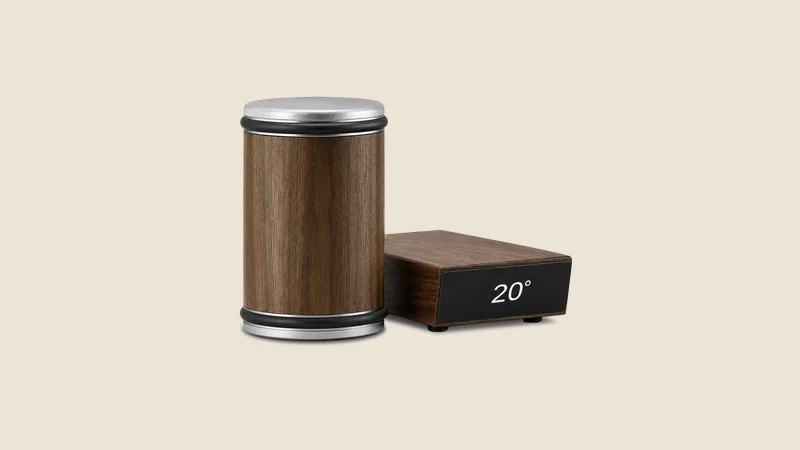
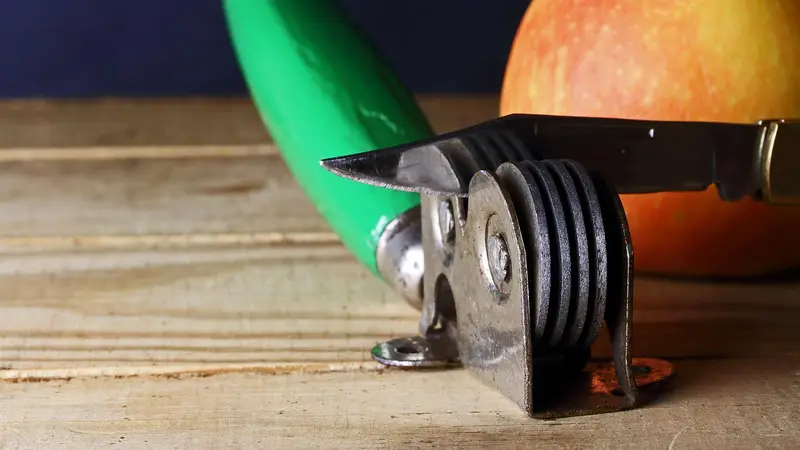
Sharpen or steel the knife on a schedule you will keep. A board that is kind to the edge only slows the dulling. It does not repeal it. If you have been cutting on metal or glass, the first honest step is a sharpening, and the second is to stop. A rolling sharpener is one way to hold the angle without learning a whetstone. The guide on rolling knife sharpeners covers what that tool does well and where it falls short. One rolling model we can link to is Cloedar Holkeem, a manual diamond-disc sharpener with a magnetic angle base; see the current offer on the seller’s page.
Pros and cons
Pros
- A smooth, non-porous metal face rinses with hot, soapy water.
- It does not soak up garlic, onion, or other odors the way wood can, and it does not need an oiling routine.
- A slim board stores easily on its side or in a narrow gap.
- Cleanup is quick after pungent prep.
Good to know
- Wash the board after each use, especially after raw meat, just as you would any board.
- Follow the care instructions on the current seller’s page, including any dishwasher note.
- A sharp knife still does the cutting; keep your edges in shape with a regular sharpening habit.
Who it’s ideal for
It is ideal for cooks who want simple cleanup: a board that rinses clean, does not hold garlic smell, and does not ask for a mineral-oil routine. If you are tired of hand-washing a scarred plastic board, or of oiling wood, a titanium board is a natural next look.
A wood or plastic board can still live beside it for the chopping you do every week. The metal board earns its place on the days when easy rinsing and a non-porous face are what you want.
Sources
Taylor Murray, “Do You Need a Titanium Cutting Board? We Reviewed One—Here’s What You Should Buy Instead,” Serious Eats, July 16, 2026. Cited without a link: the review recommends other boards and carries shopping buttons. The test described above is hers, on a Taima board. This desk did not repeat it.
Questions people actually ask
Do titanium cutting boards dull knives?
Yes, faster than wood or plastic. Serious Eats tested a titanium board and reported that a new knife was noticeably duller after about 10 swipes, with a sharpness reading moving from 108 to 261. A hard surface does not give under the edge, so the edge is what deforms.
Was that test of the Katori board?
No. Serious Eats tested a Taima titanium board. The caution is about chopping on hard metal, not a score invented for one brand.
Are titanium boards easier to clean than wood?
That part of the pitch is fair. A solid metal surface does not soak up water the way unfinished wood can, and it does not need oil. Serious Eats also found the board they tested easy to wash, including in a dishwasher, without rust. You still have to wash it. Non-porous is not the same as clean.
Should I cut raw meat on a titanium board?
Wash any board between raw meat and food you will not cook. A metal surface does not skip that step. For raw meat, a plastic board you can wash hot and replace when the grooves get deep is the usual practical choice. This is a kitchen habit, not a medical claim.
What should I use if I want to keep an edge?
A wood board or a plastic board. Serious Eats’ verdict on the titanium board was to keep the wooden one, and they pointed readers to wood and plastic instead. Use the metal board, if you own one, for jobs that are not really knife work.