The short answer
A window-cleaning robot is worth it for large, smooth panes you would otherwise clean from a ladder, if you will still stand there while it runs. It sticks by suction, sprays a little water, and drags a pad across the glass. Textured glass, small panes, or dirt that is paint and mineral crust need a different tool.
It is not worth it as a leap of faith. The Qinux Windobotz page we opened on November 19, 2026 is written like a review of fourteen robots. It does not publish a price. It does not publish suction, runtime, tank size, cord length, or what comes in the box beyond the story it is telling. Anything on that page that sounds like a score is the page’s story, not a published spec sheet.
What the machine actually is
Forget the word robot for a minute. The useful picture is a vacuum that has to stay on a vertical sheet of glass while a cloth moves.
A fan pulls air out from under the body. The outside air pushes the unit against the pane. As long as the seal holds, and the fan has power, it stays up. Pads or rollers wipe. A small pump or a sprayer wets the glass so the pad is not dragging dry grit, which is how you scratch a window while trying to clean it.
That physics has three consequences, and none of them are a brand feature.
The seal wants flat glass. A bump, a bubble in old glass, a sticker, or a textured privacy pane breaks the vacuum. The unit does not “try harder.” It loses the seal.
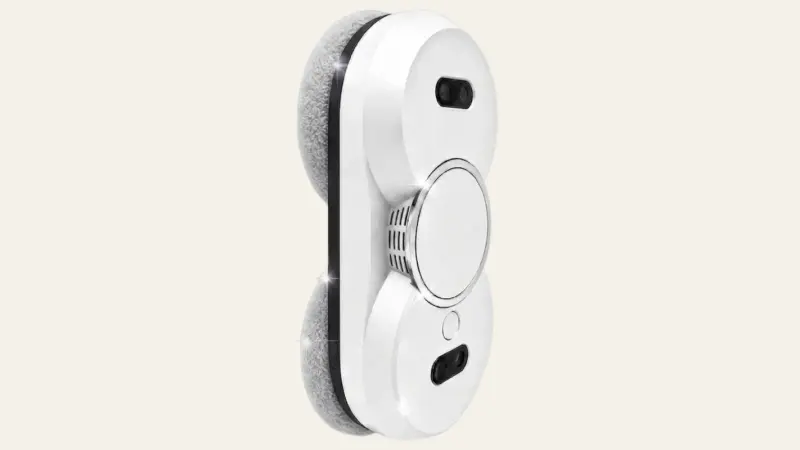
The fan wants continuous power. These are corded machines in the category we are talking about. The photo on the Windobotz page shows a white body with two round pads and a vent. It does not show a battery claim, and the page does not make one we could quote as a number. If the cord comes out, the fan stops. Plan for the unit to be able to fall.
Someone still does the edges. A body with pads cannot wipe where the glass meets the frame, and it cannot do the screen or the sill. The robot is the middle of the pane. If your tap leaves a film on a shower door, it will leave a film on a window when it dries.
What the Windobotz page does and does not say
We followed the offer to the seller’s page. The product name on the page is Qinux Windobotz. The photo it uses for that name is a white, two-pad unit. The copy says the machine uses suction, sprays water from both sides, and comes with a remote so you can start a run and pick a mode. It also says a safety system is included. It does not say how long the tether is, what it clips to, or what happens when the power fails.
The page is arranged as a comparison. It names other window robots, quotes suction numbers for those other machines, and tells a story about a testing team and a three-week evaluation. We are not repeating those numbers, that story, or the percentage the page puts on its own machine. A page that grades its own product against rivals is an ad, even when it uses the shape of a review.
What the page does say in plain language: a remote-controlled window robot that sprays water and is supposed to crawl the glass. It also says “50% off the original price” and never prints either number. On November 19, 2026 there was no dollar figure to report. The other photos in that comparison are other brands.
When a robot is the right tool
The honest win is a large, smooth pane you can reach from inside and would rather not climb for. A patio door or a picture window gives the body room to sit and the seal a flat surface. Dust, pollen, and fingerprint haze are what a damp pad can take. Paint, sticker residue, and a summer of hard-water crust still want a hand and a scraper.
You are trading the ladder for a cord and a run you stay to watch. For a person who should not be on a ladder, that trade can be the whole point. The machine is not safer because it is automatic. It is safer if it keeps you on the floor, and only if you still treat a fall as possible. Move the chair. Do not stand where the unit would land.
When you get the best results
Best results come on large, smooth, indoor-reachable panes where the pads sit fully on the glass. Start with a pane you can watch. Divided colonial grids and heavily textured, frosted, or seeded glass are harder for a suction seal.
Stay with the unit on the first run so you can see how the seal holds. Use the safety line, attached to something that can hold the unit. For outdoor glass in wind, a high pane you cannot watch, or siding and downstairs glass, a hand wash or a garden-hose nozzle from the ground is the simpler Saturday job.
Windobotz’s page, as we read it, is about windows. Keep the unit for that indoor-glass job.
Use water in the tank unless a manual you receive says otherwise. A mix from cleaning tablets belongs on a counter you can wipe, not in a pad you cannot see on the glass.
Clearer glass lets in more sun; it does not cool the room. Whether a portable evaporative cooler helps is a separate question.
Pros and cons
Pros
- It can take the middle of a large, smooth pane without a ladder, which is the only reason to own one.
- The seller’s photo is a compact two-pad unit, the kind of thing that lives in a closet rather than a garage.
- The page says a remote is part of the offer, so you are not supposed to need an app account to start it.
- You can see, on the first run, whether your glass will hold it. The experiment is reversible if you are standing there.
Good to know
- Check the current offer for the price, what is in the box, and the return window.
- Best results come when you fill it, place it, and watch the first run on a smooth indoor pane, then wipe the frame and wash the pads.
- Attach the safety line to something that can hold the unit.
- Hard-water spots, paint, and screens are separate jobs. A garment steamer is for fabric, not for mineral film on glass.
Who it’s ideal for
It is ideal for a household with a few big, smooth, indoor-reachable windows, a person who can supervise the first runs, and a taste for repeated light cleaning. Start with a pane you can see, and use the return window if the seal is not a fit.
Divided lights, heavy texture, or high exterior glass you cannot watch are better as a hand-wash or a different tool. This unit shines on the large, smooth indoor panes it is designed for.
Where Windobotz fits
Qinux Windobotz is a window-cleaning robot with suction, a dual water spray, wiping pads, and a remote. It is designed for repeated light cleaning on large, smooth, indoor-reachable glass: the unit holds itself on the pane while you direct the wash from the floor.
We may earn a commission if you buy through our links, at no extra cost to you.
If that is the job in your house, see the current Windobotz offer for the price, what is in the box, and the return terms.
A sane way to use one
This is category practice, not a procedure we timed on Windobotz.
- Read the paper that comes in the box before you wet a pad. If it conflicts with the ad, follow the paper.
- Wash the pane’s loose grit by hand on the first run, or you will grind it. A robot is a polisher of whatever is already there.
- Use water unless the manual names something else. Do not improvise a mix.
- Attach the tether to a point that can hold the unit, not to a curtain rod you do not trust.
- Put it on a pane you can watch. Keep the cord out of the pad’s path. Stay under it only if you are clear of a fall.
- Start in the middle of a clean test pane, not on the dirtiest window in the house. You are learning whether your glass holds a seal.
- When it finishes, wipe the frame and the sill yourself. Wash the pads before they dry into sandpaper. Empty the water.
If the seal will not hold on your glass, stop. More passes will not invent a flat surface. That is the moment the return policy matters, which is why you want it in writing on the checkout, not in a headline.
Sources
Qinux Windobotz seller page, reached through the offer link, viewed November 19, 2026. The description of suction, dual water spray, a remote, an included safety system, and a “50% off” line with no printed price is the seller’s. The comparison story on that page is the seller’s ad, not an independent review. The seller page is not linked here. It is the button above.
Questions people actually ask
Do window cleaning robots work on any glass?
No. They need a pane smooth enough for the suction to hold and large enough for the body to sit on. Textured glass, frosted glass, and tiny divided lights are a poor match. The Windobotz page we read did not publish a minimum pane size, so do not assume one.
Can I leave it running and go out?
You should not. These machines hold on with a fan. If the power drops, or the pad hits a dry patch and the seal breaks, the unit can come off the glass. Stay in the room for the run, and use whatever tether the box actually includes.
Will it replace a window cleaner for the whole house?
It replaces the wipe on the panes it can hold. Frames, screens, sills, and the outside of a window you cannot safely reach are still your job, or a person’s job. A robot does not wash a house.
What did Windobotz cost when we looked?
The page we opened on November 19, 2026 said “save 50% off the original price” and did not print a dollar price. We are not guessing one.