The short answer
A solid titanium cutting board can often go in the dishwasher, but only when the maker of that board says it can. The metal does not drink water, and it does not rust the way a carbon-steel knife can. That is not a blanket permission slip for every board with “titanium” in the name.
Handles, silicone feet, coatings, and wood or plastic rims are not the same material as the face. They are why two boards that look alike can have two different care notes. Follow the care instructions on the current seller page rather than inventing a dishwasher rating for a board that page does not clearly rate.
The ordinary wash is still the one the USDA’s Food Safety and Inspection Service describes for cutting boards in general: hot, soapy water after each use, then a rinse and a dry. The machine is a convenience, not a substitute for that habit, and it does not settle the other titanium question. A hard metal face is still a poor everyday chopping surface if you care about the knife, which is the subject of the titanium cutting board guide.
What “dishwasher safe” actually means
The phrase is a care instruction, not a materials science diploma. It means the maker is willing to have that object run through the heat, the detergent, and the spray of a household dishwasher. It does not mean every board in the same aisle will come out the same way.
A solid sheet of titanium is a good candidate on paper. It is non-porous. It does not need oil. It does not swell. The weak points, when there are any, are usually the extras: a handle insert, a grip pad, a painted logo, a wood rail. If those parts are not rated for the machine, the face of the board is not the part that fails.
Stand the board like a plate, not flat on the rack where it blocks the spray arm. Scrape off the food first. Let it dry before you put it away if your water leaves spots. None of that is special technique. It is how you wash a tray.
A dishwasher also does not make a dirty board clean by magic if you load it under a crust of food. And it does not change the reason you wash a board after raw chicken before you slice fruit on it. That is a kitchen habit. It is not a medical claim, and no metal surface cancels it.
What FSIS says — and what it does not
The FSIS page on cutting boards is the cleanest official language we have, and it is worth reading exactly.
It says consumers may use wood or a nonporous surface, and it names plastic, marble, glass, or pyroceramic as examples of nonporous surfaces. It says nonporous surfaces are easier to clean than wood. It recommends washing all cutting boards with hot, soapy water after each use, then rinsing and air-drying or patting dry with clean paper towels.
On the dishwasher, the sentence is specific. “Nonporous acrylic, plastic, or glass boards and solid wood boards can be washed in a dishwasher (laminated boards may crack and split).” That is the list. Titanium is not on it. Marble is named earlier as a nonporous surface and is not repeated in the dishwasher sentence either. We are not going to stretch a government list to cover a metal the list does not mention.
FSIS also suggests using one board for produce and bread and another for raw meat, poultry, and seafood, so the first board is not asked to host food that will not be cooked. That is a layout habit for the counter, not a verdict on titanium.
What we will take from the page, without embroidery, is the wash itself and the honesty about the list. If you want official language about dishwashers and cutting boards, that is the language. For a titanium board, the next document to read is the care note that came with the board.
What Serious Eats washed
In July 2026, Taylor Murray at Serious Eats reviewed a Taima titanium cutting board. The piece is titled “Do You Need a Titanium Cutting Board? We Reviewed One—Here’s What You Should Buy Instead.” The review is cited here without a link because it recommends other boards and carries shopping buttons.
The headline finding in that review, and the reason we already wrote a guide about dulling, is that the board was hard on a knife. Murray also wrote down the cleanup side. The board was easy to wash. It did not absorb moisture or hold odors the way a neglected wood board can. It went through a dishwasher without rusting. The surface scratched, but the scratches were cosmetic.
Those sentences belong to the board she washed. They are useful as a category clue: a plain titanium face can survive a household dishwasher, at least once, on the product she had in hand. They are not a lab report on every titanium board, and they are not a result for Katori.
If a seller’s page shows a gleaming metal board in a dishwasher rack, treat that as advertising until you have the care instructions in front of you. Serious Eats earned the right to say what happened to the Taima board. A product photo does not.
How to wash a metal board
At the sink
Scrape off the scraps with the spine of the knife or a bench scraper, not with the edge you are trying to keep. Wash with hot water and a little dish soap, using a regular sponge. Rinse. Dry it, or stand it so it can dry. That is the whole routine on most days, and it is the same wash FSIS describes for boards in general.
Skip steel wool and scouring powder unless the maker says otherwise. They are unnecessary on a smooth metal face, and they are a fast way to add a haze of scratches you will then spend time noticing. A metal board does not need oil, seasoning, or a soak. Standing water is not a structural threat the way it is on wood, but it can leave spots in hard-water kitchens. A towel handles those.
In the dishwasher
Only if the care note for that board says you may. Stand it along the side or back of the bottom rack so water can reach both faces and so the board is not parking on the spray arm. Use the detergent you already use for dishes. You do not need a special tablet for titanium.
When the cycle ends, check the board the way you would check a tray. If your machine leaves a chalky film, wipe it. If a handle, a foot, or a rim looks worse than the face, that part was the weak link, and the machine may not be the right wash for that board after all.
The machine does not retire the sink. A mid-cooking rinse, when you go from raw meat to herbs, still happens at the faucet. Put the board in the dishwasher when the meal is over, if the maker allows it, not as a way to skip the wash in between.
Where Katori fits
Katori is a titanium cutting board with a smooth metal surface for people who want simple cleanup. It is low-absorption and straightforward to wash, without the oiling a wood board wants. A non-porous face rinses with hot, soapy water and does not need a seasoning routine.
We may earn a commission if you buy through our links, at no extra cost to you.
If easy cleanup is the reason you are considering it, read the care instructions on the current Katori offer and follow those. Confirm the size and what is included before you order.
Wood and plastic still have their own rules
A titanium board does not retire the other boards in the house. Most home kitchens still need a surface that is kinder to the knife, and those surfaces have their own dishwasher rules.
FSIS says solid wood boards can go in the dishwasher and that laminated boards may crack and split. Many wood makers, even so, ask you to wash by hand, dry the board on its edge, and oil it when it looks ashy. If the maker says to stay out of the machine, the official list is not a permission to ignore the person who built the board. Heat and sitting water are how wood warps.
Plastic is the unsentimental one. It often can go in the dishwasher if the maker says so, and it is the usual practical choice for raw meat in a home kitchen, as long as you replace it when the grooves get deep enough to hold onto food. The kitchen shelf is where the later guides on raw meat and on oiling wood will live. Until they are written, the habit is simple: wash, dry, and do not pretend a scarred board is fine because it has been through a hot cycle.
Glass and stone can often take the machine. They are still a poor place to cut, for the same reason titanium is. Surviving the dishwasher is not the same as being good at the job.
The knife is a separate question
The reason titanium boards sell is cleanup. The reason to be careful with them is the edge. Those two facts can sit in the same kitchen. They should not be mashed into one slogan.
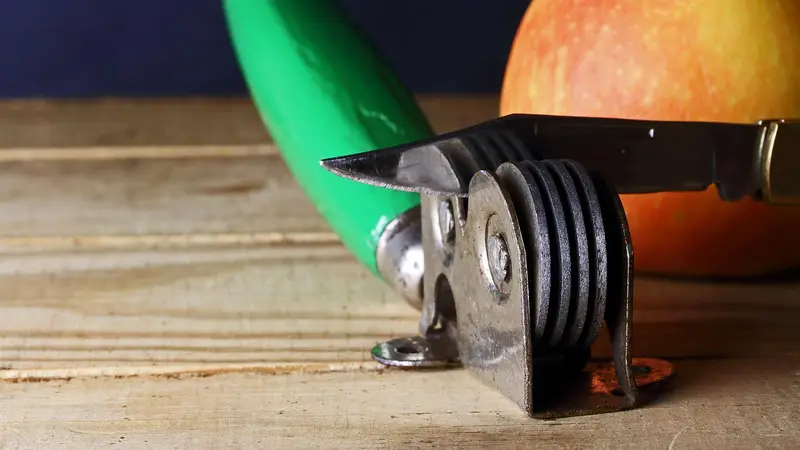
If you already own a metal board and you like how fast it rinses, keep it for the jobs that are mostly a platter, and cut on wood or plastic. If a hard board has already taken the edge off a knife you care about, a rolling sharpener is one way to hold an angle without learning a whetstone. The guide on rolling knife sharpeners covers what that tool does well and where it falls short.
A dishwasher will not dull a knife that is not in the machine. It also will not undo a week of chopping on metal. Wash the board the way its maker tells you to. Cut on something that gives a little.
Pros and cons
Pros
- A titanium face is easy to wash with hot, soapy water and does not need oiling.
- The metal does not soak up juices the way wood can, so cleanup stays simple.
- Many solid metal boards can go in the dishwasher when that board’s maker says so.
- A slim board stores easily once it is dry.
Good to know
- Read the care note that came with your board before you use the dishwasher, and follow that note.
- A mid-cooking rinse at the sink still helps when you go from raw meat to herbs.
- Stand the board so water can reach both faces, and wipe it if your machine leaves a film.
Who it’s ideal for
It is ideal for cooks who want a cutting surface that rinses clean and may, if the maker allows it, go in the dishwasher. If you dislike oiling wood or hand-washing a scarred plastic board, a titanium board is built around that easier cleanup.
Keep the care instructions handy, and wash at the sink between jobs even when the board will go in the machine later.
Sources
- USDA Food Safety and Inspection Service, “Cutting Boards”. Last updated August 27, 2024. The wash with hot, soapy water; the dishwasher sentence naming acrylic, plastic, glass, and solid wood; and the advice to keep raw meat on a separate board.
- Taylor Murray, “Do You Need a Titanium Cutting Board? We Reviewed One—Here’s What You Should Buy Instead,” Serious Eats, July 16, 2026. Cited without a link: the review recommends other boards and carries shopping buttons. The dishwasher pass described above is hers, on a Taima board. This desk did not repeat it.
Product details come from the seller’s page and can change.
Questions people actually ask
Are titanium cutting boards dishwasher safe?
Many solid titanium boards can go in the dishwasher, but only if the maker of that board says so. The metal itself does not rust the way ordinary steel can, and it does not soak up water. Handles, rubber feet, coatings, and wood accents can change the answer. Read the care note that came with the board you own.
Did Serious Eats put a titanium board in the dishwasher?
Yes. In a July 2026 review of a Taima titanium board, Taylor Murray wrote that the board went through a dishwasher without rusting. That was a Taima board, not Katori.
Is the Katori board dishwasher safe?
Confirm the current care instructions on the seller’s page, and follow those instructions rather than a review of a different product. Do not treat a dishwasher pass on a different board as a promise for this one.
Does a dishwasher replace washing the board after raw meat?
No. Wash the board after raw meat, poultry, or seafood before you use it for food you will not cook. That is ordinary kitchen sense, not a claim that one material makes food safe. The USDA’s Food Safety and Inspection Service says to wash cutting boards with hot, soapy water after each use.
Can wood and plastic boards go in the dishwasher?
FSIS says nonporous acrylic, plastic, or glass boards and solid wood boards can be washed in a dishwasher, and that laminated wood boards may crack and split. Many wood makers still ask you to wash by hand. If the board’s own label says to stay out of the machine, follow the label.